Castle Solitaire: Card Game
MobilityWareCard
4.78.47K Reviews
- Version
- 2.3.1.1845
- Installs
- 1.00M
- Age Rating
- Everyone
Screenshots
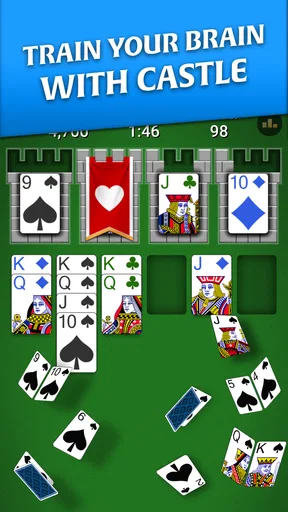
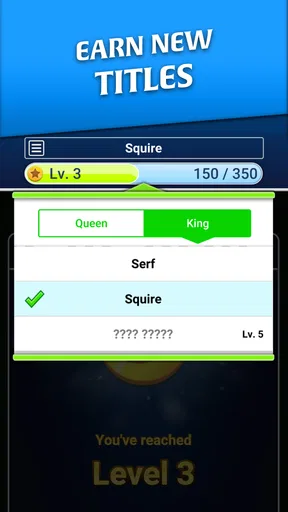
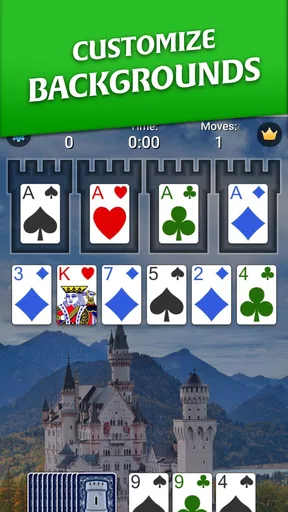
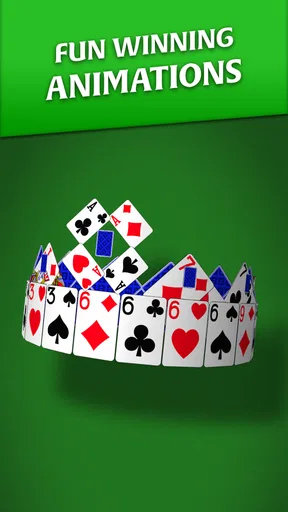
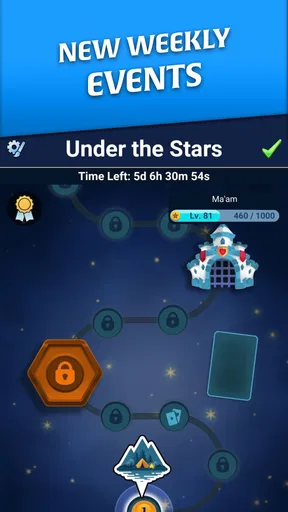
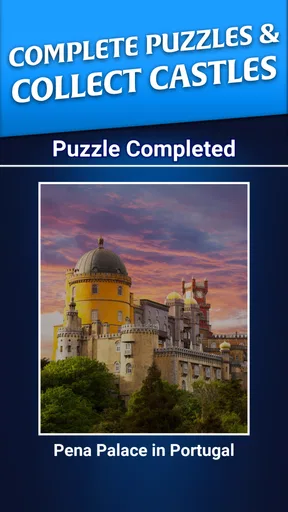
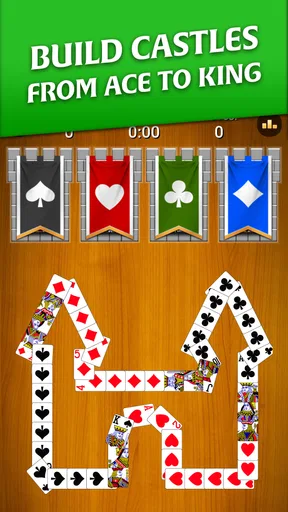
Our Review of Castle Solitaire: Card Game
 Analysis by Appyee
I went into Castle Solitaire: Card Game expecting a familiar patience-style card game with a medieval skin, but its presentation does more than decorate the cards. The castle-building idea gives each round a small sense of purpose, while the solitaire play remains easy to understand when I only have a few quiet minutes. That balance is the main reason I can imagine returning to it instead of treating it as a one-time download.
This is a free card game from MobilityWare, aimed at Everyone and available for Android devices running version 8.0 or later. It has built a strong audience, with a 4.7 average from around 103 thousand ratings and more than a million installs. Those figures suggest a well-established casual game, but they do not replace the more important question: does the setting improve the actual experience? In my view, it does, although only if you enjoy relaxed solitaire rather than deep strategy or fast competition.
My first impression of the castle-building idea
The opening appeal is straightforward. You play solitaire, and the results contribute to building a champion castle. That framing gives the usual card-clearing routine a visible destination. Instead of feeling as though I am simply completing disconnected hands, I have a reason to care about the next successful run, even when the card mechanics themselves remain familiar.
The game works best when I treat it as a short, low-pressure activity. I can start a hand while waiting for an appointment, play through a few decisions during a coffee break, and stop without needing to remember a complicated storyline. The castle theme supplies continuity between those moments. It is not a substitute for a large adventure game, but it is enough to make repeated solitaire feel more personal.
That distinction matters. The central attraction is still the card puzzle, not exploration, character development, or a dramatic campaign. If you want a game with a large world to investigate, this will feel deliberately small. If you want a familiar card format with a visual sense of progress around it, the structure is much more convincing.
I also appreciate that the basic entry point is free. You can try the core experience without paying first, while optional in-app purchases range from $0.79 to $29.99 per item. For me, that makes the sensible approach simple: play naturally before considering any purchase. The castle theme is pleasant, but it is not a reason by itself to spend money.
A useful fit for small pockets of time
A realistic everyday use case is a slow commute as a passenger or a short break between tasks. I would open a hand, make a few moves, and decide whether to continue based on how much attention I had available. The game does not demand the kind of uninterrupted focus that a competitive multiplayer title requires, yet it still gives me enough decisions to prevent the activity from becoming completely passive.
There is a trade-off here. Short sessions are convenient, but the same convenience can make the loop feel repetitive during a long play period. I would recommend it to someone who likes returning to a familiar puzzle in small doses. I would not choose it as my main game for an entire evening unless I already enjoyed traditional solitaire and found the castle progression motivating.
The world is communicated through visual language
The strongest artistic choice is the way the castle concept turns an abstract card routine into a place. The setting gives the game a medieval identity without forcing a complicated story onto every hand. I read the castle as a visual reward for persistence: each round belongs to a larger construction project, even though the moment-to-moment action remains on the card table.
That restraint helps the presentation stay coherent. A more elaborate fantasy layer could easily distract from the clean thinking required by solitaire. Here, the setting supports the mechanics rather than competing with them. I know where the game wants my attention: first on the available card move, then on the broader sense of progress.
The art direction also changes how I perceive repetition. In an ordinary solitaire app, completing another hand can feel like checking off an isolated task. The castle gives those repetitions a shared visual context. It does not transform every move into a dramatic event, but it makes the overall session feel less anonymous.
At the same time, players should keep their expectations realistic. The world language is atmospheric rather than expansive. I would not install this expecting detailed lore, a cast of memorable characters, or a story that develops like a role-playing game. Its medieval identity is there to give the card game mood and direction, not to become a separate narrative system.
Why the setting improves the familiar format
The most interesting design trade-off is that the castle theme adds motivation without changing the fundamental mental rhythm of solitaire. I still examine the layout, look for safe sequences, and decide whether a move opens a better possibility. The reward layer makes those decisions feel connected, but it does not overwhelm them with unrelated tasks.
That makes Castle Solitaire particularly suitable for players who have tried standard solitaire apps and found them functional but emotionally flat. The setting gives a little more personality. On the other hand, someone who prefers a completely stripped-down card table may find the decorative framing unnecessary and may be better served by a simpler alternative.
For me, the visual setting is most effective when I am playing casually. If I am concentrating on a difficult hand, I want the presentation to stay out of the way. If I am playing after a tiring day, the castle atmosphere gives the session a softer identity than a plain utility-style card game.
Sound and pacing shape the mood
The game’s mood depends not only on what appears on screen but also on how the action unfolds. Solitaire naturally creates a stop-and-think rhythm: I pause, inspect the choices, make a move, and reassess the layout. That pacing suits a castle-building theme better than a frantic presentation would. The game feels like a quiet routine of steady progress rather than a race.
I find that rhythm useful because it leaves room for casual attention. I can play actively without feeling rushed, and I can take a moment to consider whether a move is merely available or genuinely helpful. That distinction is important in solitaire. The best move is not always the first obvious move, and a calm pace makes it easier to notice the difference.
The sound design works best as support rather than spectacle. In a game like this, audio should reinforce card movement and reward moments without making every action feel oversized. The medieval setting benefits from that measured approach. A loud, aggressive soundtrack would fight against the reflective card-play rhythm, while a restrained soundscape helps the castle idea feel settled and consistent.
I would still recommend adjusting the audio to match the situation. During a public commute or while listening to a podcast, I prefer a quieter setup so the game becomes a visual puzzle. At home, keeping the game’s own sound available can make the small actions feel more complete. The important point is that the pacing remains readable even when I am not treating the session as a serious challenge.
Where the rhythm can lose its charm
The same calm structure that makes the game comfortable can also expose its limits. Players who need constant novelty may find the pace too gentle. There is no obvious reason for someone seeking rapid action, competitive pressure, or a strong narrative to choose this over a more energetic card game.
Long sessions can also make the repeated cycle more noticeable. I find the game more satisfying when I use the natural pauses between hands rather than trying to force an extended marathon. A practical tip is to treat the castle progress as a reason to return later, not as a target that must be completed in one sitting. That keeps the atmosphere pleasant and reduces the sense of grinding.
This is also where the free-to-play structure deserves attention. Optional purchases may appeal to players who want to support the game or accelerate their enjoyment, but I would avoid making spending part of the basic routine. The core appeal is the card decision itself, and the experience is easier to judge when I first play without assuming that every inconvenience needs a purchase.
How the mechanics fit the presentation
The castle concept succeeds because it remains connected to the card game. The visual reward gives me a reason to care about successful hands, while the solitaire rules provide the actual substance. Neither side has to pretend to be something else. That is a healthier design relationship than adding a decorative theme that has no connection to what I do on screen.
My main strategic advice is to avoid playing every available move immediately. I get more from the game when I scan the layout first, consider which card will reveal a useful option, and keep the broader sequence in mind. Even in a relaxed title, careless moves can reduce the quality of a hand. The castle mood may be peaceful, but the card decisions still reward patience.
A second useful habit is to separate progress from perfection. If I focus only on completing every hand flawlessly, the game becomes more demanding than its atmosphere suggests. If I treat each round as a small puzzle that contributes to a larger visual goal, setbacks are easier to accept. That approach preserves the relaxed mood while still giving my choices meaning.
The game is also a better match for people who enjoy gradual visual motivation than for players who need complex deck construction. It is not the right choice if you want to build a custom card collection, plan a competitive strategy around different characters, or manage a large role-playing system. Its appeal comes from the clarity of one central activity and the castle identity wrapped around it.
Compared with ordinary solitaire apps
Compared with a bare-bones solitaire utility, this game offers more atmosphere and a clearer sense of continuity. The castle gives me something to look toward after a hand, which can make repeated play feel more rewarding. The cost of that personality is that the experience is less purely functional. Someone who wants the fastest possible route from opening the app to arranging cards may prefer a minimalist alternative.
Compared with competitive card games, it is calmer and more forgiving in spirit. There is no need to monitor another player or react to a changing opponent. That makes it a good choice for winding down, but a weak choice for anyone who measures enjoyment through tension, bluffing, or direct competition.
Compared with large fantasy games, the balance is reversed: this offers a lighter setting and a much smaller commitment. I can enjoy the castle mood without learning a complicated world, but I should not expect the depth or variety of a full adventure. The best comparison is therefore not “a fantasy game with cards,” but “a solitaire game that uses fantasy atmosphere to make routine progress more engaging.”
Who should play and who should skip it
I would recommend it to casual card players, fans of traditional patience games, and anyone who likes a gentle visual reward between short rounds. It is especially suitable for people who want something they can pick up without a tutorial-heavy commitment. The Everyone age rating also makes its tone broadly accessible, although individual preferences about purchases and repetition still matter.
I would skip it if your priority is multiplayer competition, a deep story, fast action, or constant mechanical variety. I would also hesitate to recommend it to someone who dislikes progression layers around classic games. The castle is central to the game’s identity, so players who want an entirely plain card table may feel that the setting adds clutter rather than value.
Android users should note that the listed minimum requirement is version 8.0, and the current version is 2.3.1.1845. That makes checking device compatibility worthwhile before installing, particularly on an older phone or tablet. The game is free to start, but the optional purchase range is another reason to review spending preferences before handing the device to a child, even with an Everyone content rating.
My atmosphere verdict after extended play
What stays with me is the consistency between the castle imagery, the unhurried card rhythm, and the modest sense of accomplishment after each hand. The game does not need a dramatic plot to create a mood. It uses setting as a gentle layer over solitaire, and that layer gives the familiar format enough identity to stand apart from a purely generic card table.
Its limitations are equally clear. The experience can become repetitive if I demand long sessions or expect the castle theme to provide the depth of a full adventure. Optional purchases also mean I prefer to keep the free experience as my baseline and decide carefully whether anything extra is genuinely useful. Those are not deal-breakers, but they make the game better suited to selective, relaxed play than constant daily grinding.
MobilityWare has made a card game that understands its own scale. It is not trying to replace a strategy epic or a competitive card battler. Instead, it gives familiar solitaire a coherent medieval mood, a visible reason to continue, and a pace that fits spare moments. My recommendation is strongest for players who want calm card play with a little atmosphere, not for anyone searching for high-stakes action.
In the end, I would keep Castle Solitaire installed as a dependable short-session game. I can open it when I want a puzzle that asks for attention without demanding all of it, and the castle setting gives the routine more character than a standard solitaire app. If that combination sounds appealing, the free entry point makes it easy to test for yourself. If you need competition, narrative depth, or constant surprise, another card game will likely serve you better.
Verdict
Strengths of Castle Solitaire: Card Game
- Easy-to-learn solitaire rules suit both beginners and casual players.
- Short rounds make it convenient for quick breaks or commutes.
- Smooth card controls work well on touchscreen devices.
- Offline play is useful when Wi-Fi or mobile data is unavailable.
- Relaxing gameplay offers a low-pressure way to pass the time.
Limitations of Castle Solitaire: Card Game
- Advertising may interrupt play or reduce the otherwise relaxing experience.
- Limited gameplay variety can feel repetitive after extended sessions.
- Some features or extras may require in-app purchases.
- Small cards or interface elements may challenge users with poor eyesight.
- Progress and rewards may feel less meaningful to experienced solitaire players.
Other Releases by MobilityWare
View All

Similar Picks in This Category
View All
Solitaire - Classic Card Games
MobilityWare4.6

UNO!™
Mattel163 Limited4.3

Spider Solitaire: Card Games
MobilityWare4.6

Solitaire.com - Classic Cards
Tripledot Studios Limited4.7

Plants vs. Zombies™ Heroes
ELECTRONIC ARTS4.1

Hearthstone
Blizzard Entertainment, Inc.4.1
Frequently Asked Questions
What is Castle Solitaire: Card Game?
Castle Solitaire: Card Game is a casual solitaire-style game built around clearing cards and completing castle-themed layouts. It combines familiar single-player card mechanics with a light progression system, attractive visuals, and short rounds that are convenient for quick breaks. The game is generally easy to understand, although some levels may require careful planning rather than simply tapping the available cards.
How do you play Castle Solitaire: Card Game?
The main objective is to remove cards from the playing area by following the game’s matching or sequencing rules, depending on the current layout and mode. Players should check which cards are available before making a move, because uncovering a hidden card can create better options later. When no useful move remains, available boosters or undo features may help, if included in the version installed.
Is Castle Solitaire: Card Game free to download and play?
Castle Solitaire: Card Game can typically be downloaded and played without an upfront purchase, but free gameplay may include advertisements, optional in-app purchases, or both. Extra features such as boosters, additional lives, cosmetic items, or ad removal may depend on the platform and current release. Before downloading, review the store listing and purchase settings, especially if children use the device.
Can Castle Solitaire: Card Game be played offline?
Many solitaire rounds can often be played without a continuous internet connection, which makes the game suitable for travel or areas with limited service. However, online access may still be required for advertisements, daily challenges, cloud synchronization, updates, or in-app purchases. Offline availability can vary by version, so it is best to test the game after installation rather than assuming every feature works without internet.
Is Castle Solitaire: Card Game suitable for beginners?
Yes, Castle Solitaire: Card Game is generally approachable for beginners because the basic card actions are simple and the game usually introduces its mechanics gradually. Players familiar with classic solitaire should recognize many of the ideas immediately, while newcomers can learn through the early levels. Difficulty may increase as layouts become less forgiving, so patience and thoughtful moves are more useful than fast tapping.
Play our best games!


